Ancient Mysteries · Ancient Alien Theory
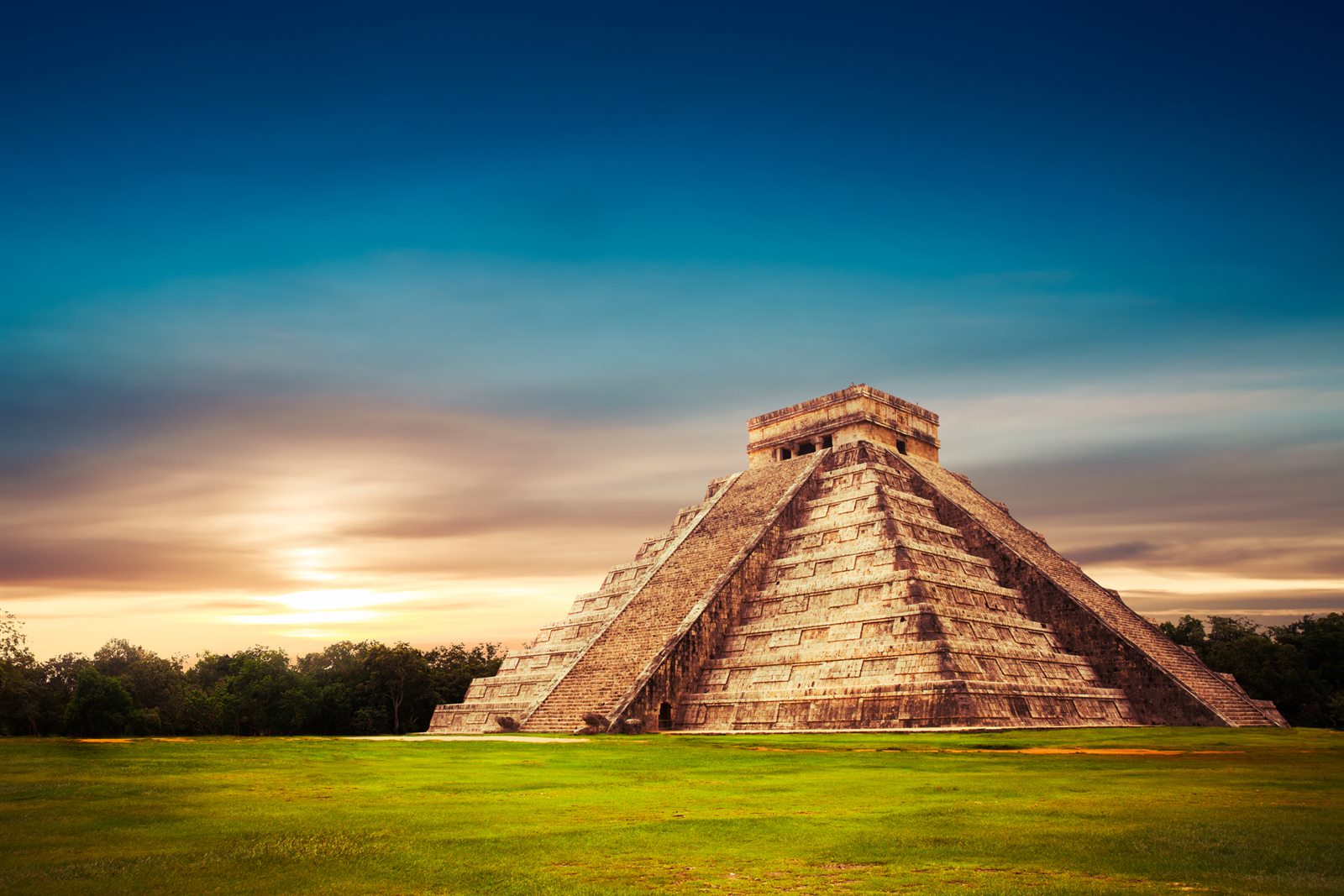
Chichén Itzá
Where the feathered serpent descends the pyramid.
📍 Yucatán, Mexico
Ancient Mysteries · Ancient Alien Theory
Where the feathered serpent descends the pyramid.
📍 Yucatán, Mexico
A great Maya city crowned by a pyramid that turns the sun itself into a serpent twice a year.
At its height between about 600 and 1200 AD, Chichén Itzá is dominated by El Castillo, the Temple of Kukulcán — a 79-foot step pyramid with 365 steps, one for every day of the year.
The city blended Maya and Toltec influences and controlled a network of sacred cenotes — natural sinkholes used for offerings. Beyond El Castillo lie the largest ball court in Mesoamerica and the Caracol, a round observatory tower whose windows track the movements of the planet Venus.
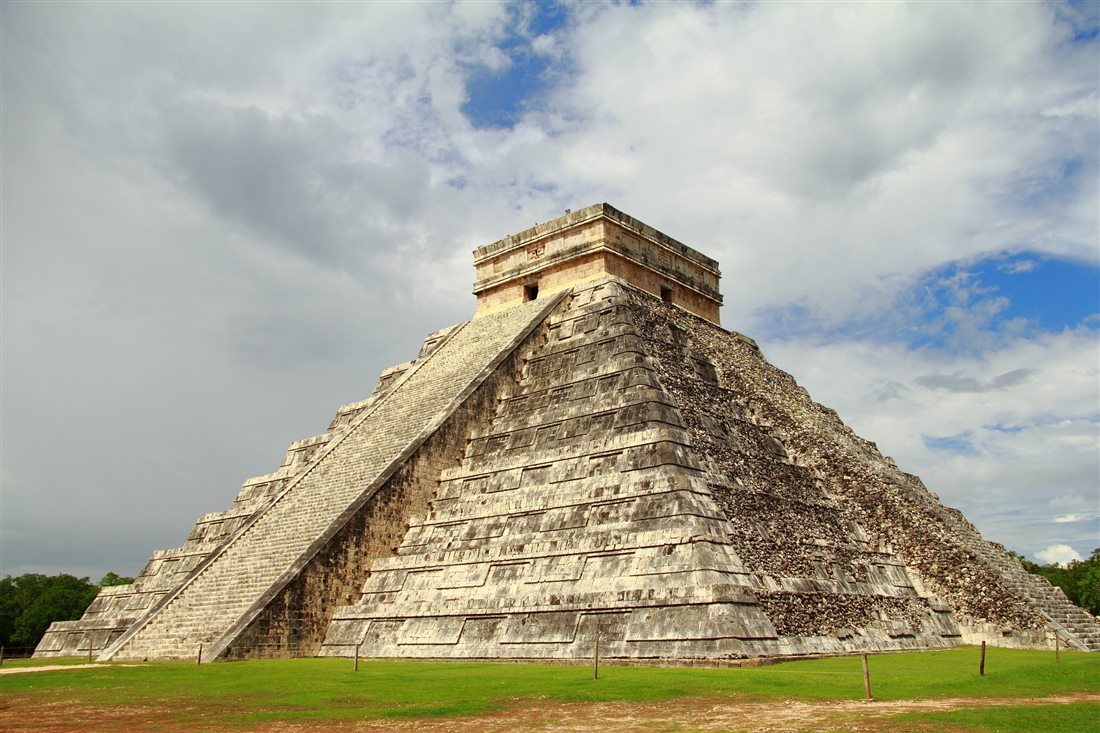
On the spring and autumn equinox, the afternoon sun casts a shadow of a serpent slithering down the staircase. A handclap at its base returns a chirp said to echo the sacred quetzal bird. How did the builders achieve such exact solar and acoustic design?
What makes it unique on this list: Its signature is astronomy made visible: a pyramid engineered so the sun itself performs on cue, twice a year, for anyone standing below.
What would need to be answered to put the mystery to rest:
Easily reached from Cancún and the Riviera Maya. Journeys pair it with the cenotes and the Maya coast, and can extend inland to Teotihuacan near Mexico City.
Most visitors base themselves on the coast and make the ruins a day trip — see Cancún hotel prices on RoomsCheap.com.
Register your interest
Tell us you're interested — and whether you'd join a small-group journey led by a well-known voice from the ancient-astronaut field. It takes a minute, and there's no obligation.
Register My Interest →