Ancient Mysteries · Ancient Alien Theory
Mohenjo-daro
A 4,500-year-old city with modern plumbing.
📍 Sindh, Pakistan
Ancient Mysteries · Ancient Alien Theory
A 4,500-year-old city with modern plumbing.
📍 Sindh, Pakistan
One of the world's first planned cities — astonishingly advanced, and ending in an unsolved mystery.
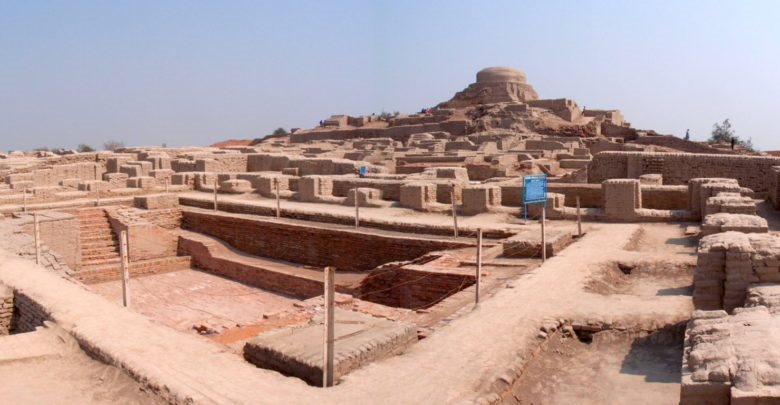
Mohenjo-daro rose around 2500 BC in the Indus Valley, one of the earliest planned cities on Earth. It housed perhaps 40,000 people on a precise grid, with baked-brick houses, covered drains, public baths and standardized weights — an urban sophistication unmatched for thousands of years.
Mohenjo-daro and its sister city Harappa anchored the Indus Valley Civilization, which at its height rivaled Egypt and Mesopotamia. The city had the Great Bath, granaries and the earliest known city-wide sanitation — private toilets and covered sewers — yet left almost no monumental art, temples, palaces or royal tombs.
The Indus script has never been deciphered, so the city keeps its secrets. Ancient-astronaut writers point to the region's old Sanskrit accounts of flying “vimanas” and fiery weapons, and to disputed claims of vitrified stone, asking what ended so advanced a city. Mainstream archaeology attributes the decline to climate change and shifting rivers.
What makes it unique on this list: It is the “too advanced, too soon, and then gone” case: a hyper-organized city with modern-feeling infrastructure, a script no one can read, and a still-debated end.
What would need to be answered to put the mystery to rest:
Reached from Karachi or Sukkur in Sindh, Pakistan — a site for the serious traveler, subject to travel advisories at the time of departure.
Register your interest
Tell us you're interested — and whether you'd join a small-group journey led by a well-known voice from the ancient-astronaut field. It takes a minute, and there's no obligation.
Register My Interest →