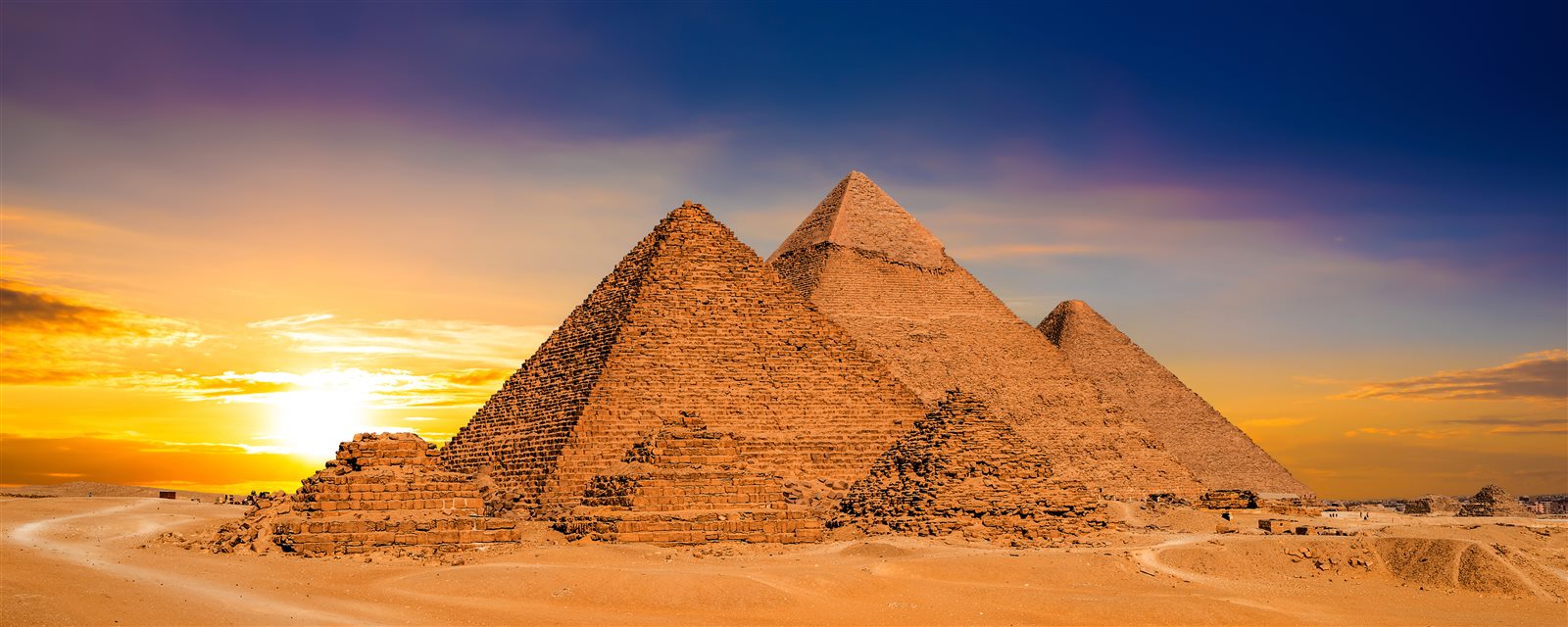
Ancient Mysteries · Ancient Alien Theory
The Giza Pyramids & Great Sphinx
The last wonder of the ancient world still standing.
📍 Giza, Egypt
Ancient Mysteries · Ancient Alien Theory
The last wonder of the ancient world still standing.
📍 Giza, Egypt
The last of the Seven Wonders still standing — and the yardstick against which every ancient-mystery debate is measured.
The Great Pyramid, built around 2560 BC for the Pharaoh Khufu, rises 481 feet from roughly 2.3 million limestone and granite blocks — some weighing 50 to 80 tons. Beside it stand the pyramids of Khafre and Menkaure and the Great Sphinx, carved from a single outcrop of bedrock.
Originally sheathed in polished white limestone that would have blazed in the sun, the Great Pyramid held the record as the tallest structure on Earth for nearly 3,800 years. Its sides align to the cardinal points to within a twentieth of a degree, and its 13-acre base is level to within about an inch.
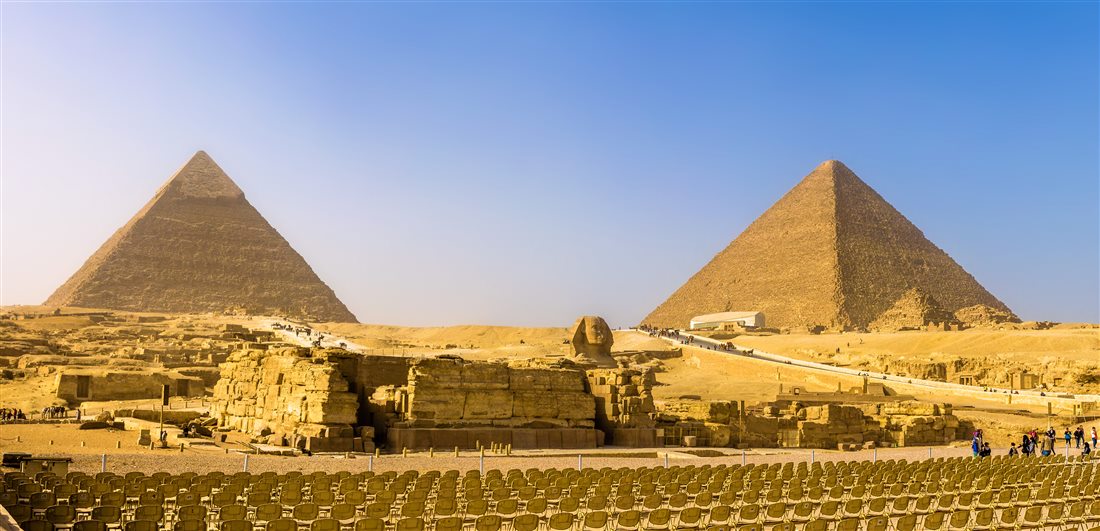
How a Bronze Age civilization quarried, moved and set blocks to millimeter precision — and aligned the monument to true north — is still debated. Ancient-astronaut theorists point to the astronomical alignments, the near-impossible tolerances and the sheer scale, and ask whether the builders had knowledge or help we do not yet understand.
What makes it unique on this list: Of every site on this list, Giza is the benchmark: precision, colossal scale and astronomy fused into one monument. Every ancient-mystery argument eventually circles back to how it was built.
What would need to be answered to put the mystery to rest:
Cairo sits minutes from the Giza plateau. Most journeys pair the pyramids and Sphinx with the Grand Egyptian Museum, then continue by Nile cruise to the temples of Luxor and the Valley of the Kings.
Staying a few nights before the Nile? Browse Cairo and Giza hotels on RoomsCheap.com — some rooms look straight out at the pyramids.
Register your interest
Tell us you're interested — and whether you'd join a small-group journey led by a well-known voice from the ancient-astronaut field. It takes a minute, and there's no obligation.
Register My Interest →